Blog · 5 min read
Wedding Budget Breakdown: How to Decide What to Spend on What
A calm wedding budget breakdown: every category to plan for, a priority method for splitting your total, the hidden costs couples forget, and how to track deposits and payments.
Published · SoftPlan Treasures
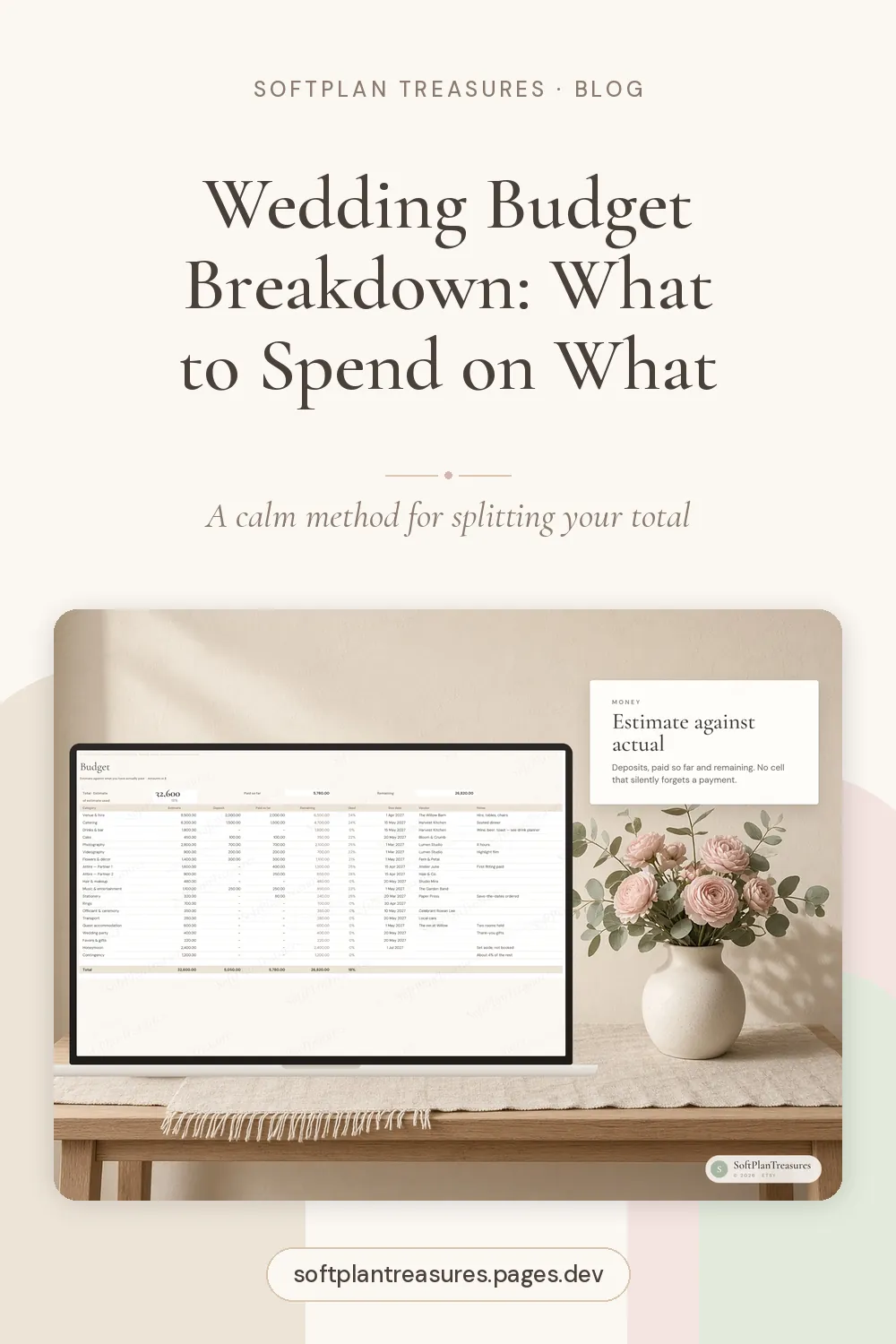
Search for "wedding budget breakdown" and you'll find neat pie charts telling you exactly what share of your money should go to the venue, the dress and the flowers. The problem is that those charts describe someone else's wedding. Prices vary enormously between countries, cities and seasons, and what one couple considers essential, another skips entirely.
So instead of handing you percentages, this guide gives you something more useful: a complete list of categories and a simple method for splitting your total based on what matters to the two of you.
Step 1: Agree on the total first
Before you look at a single venue, agree on one number: the most you are willing to spend on the whole wedding. Work out:
- what you have saved
- what you can set aside each month until the date
- any contributions from family, confirmed, not hoped for
Write the total down somewhere you both can see it. Every decision after this is about dividing that number, not growing it.
Step 2: List every category
Here's a full list of wedding budget categories. Not every wedding needs every line, but it's much easier to cross something out than to discover it three weeks before the day.
Ceremony and paperwork - Officiant or ceremony fees - Legal paperwork and certificates - Ceremony venue, if separate
Venue and food - Reception venue hire - Catering, per guest - Drinks and bar, corkage - Cake or dessert - Rentals: tables, chairs, linens, tableware
Attire and beauty - Dress or suit - Alterations - Shoes and accessories - Hair and make-up - Rings
Photo, music and atmosphere - Photographer - Videographer - Music: band, DJ, ceremony musicians - Flowers and decor - Lighting
Guests and paper - Save the dates and invitations - Postage - Place cards, menus, seating chart - Favours
Logistics - Transport - Accommodation - Wedding party gifts - Vendor meals, if your contracts require them
The buffer - A contingency line for surprises
Step 3: Rank your top three
Sit down together and each pick the three things you'll remember most. Maybe it's the photos, the food and the music. Maybe it's the dress, the venue and having everyone you love in one room.
Compare lists. The categories you both picked are your priorities. Give them a generous share of the budget and get real quotes for them early.
Then pick the three things you care least about. These are where you save: a simpler cake, digital invitations, fewer flowers, a friend with a great playlist instead of a DJ.
Step 4: Get real quotes, not averages
Your budget becomes realistic the moment you replace guesses with real numbers. For your top categories, ask two or three vendors for quotes and write down:
- the full price, including tax and service charges
- the deposit and when it's due
- when the balance is due
- what's included and what isn't
Put the estimate next to the real quote. If a priority category comes in higher than planned, move money from a low-priority one, not from the buffer.
Step 5: Let the guest count drive the budget
Many of the biggest costs grow with every guest: catering, drinks, chairs, invitations, favours, sometimes even the size of venue you need. Before you finalise the budget, finalise a realistic guest count, and look at what each extra guest really costs across all those categories.
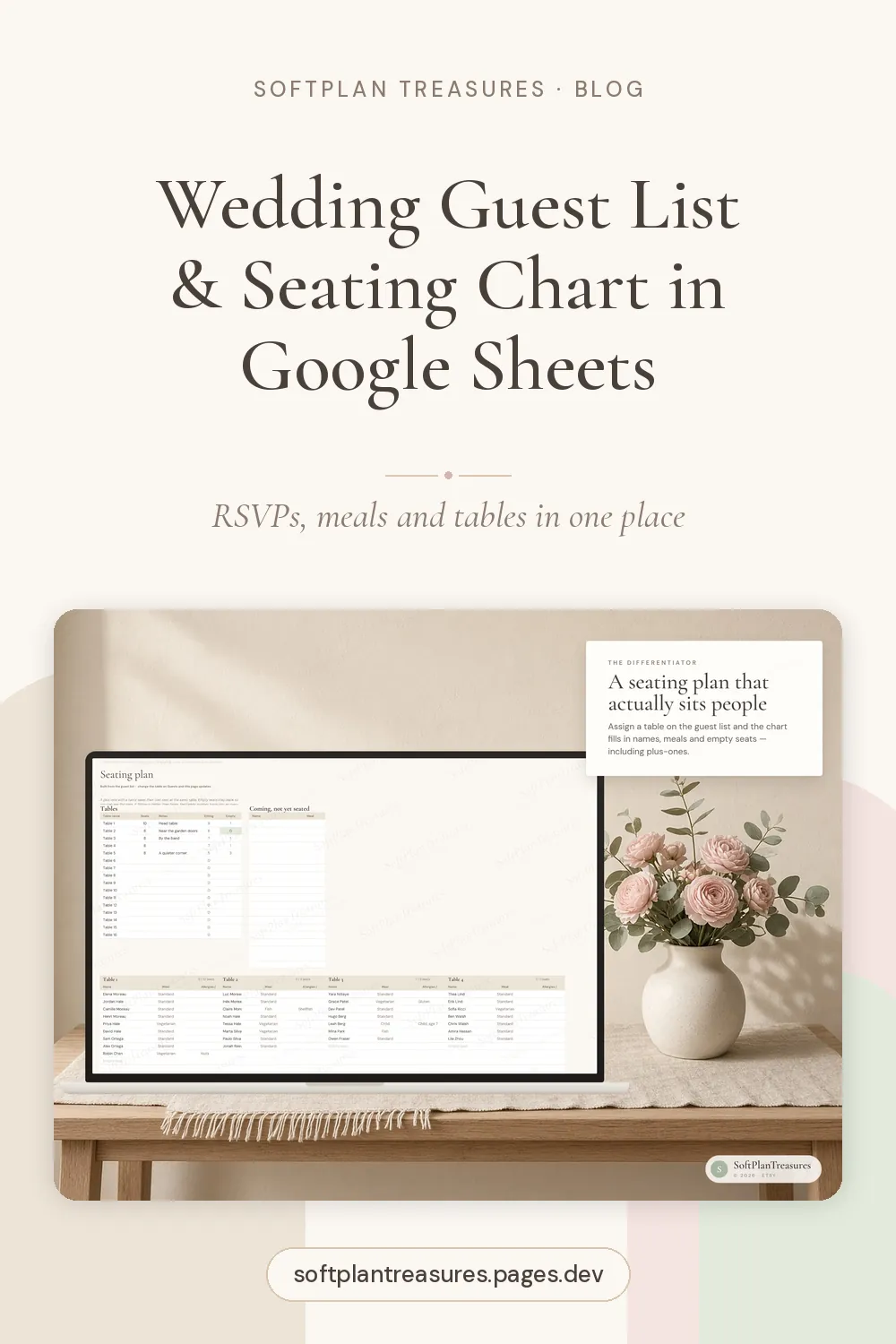
This is also why your guest list and your budget should live in the same place. When an RSVP changes, you want to see the effect right away. If you're working on the guest list now, our guide to a wedding guest list and seating chart in Google Sheets walks through it.
The hidden costs couples forget
These rarely make it into the first draft of a wedding budget:
- Service charges and taxes on catering and venue quotes
- Alterations to the dress or suit
- Postage for invitations, especially heavier or oddly shaped ones
- Vendor meals for photographers, musicians and planners
- Overtime if the party runs late
- Delivery and set-up fees for rentals and flowers
- Tips, where they're customary
- Hair and make-up trials
- Marriage paperwork and any fees for certificates
- Emergency kit: safety pins, plasters, stain remover
Step 6: Track what's paid, not just what's planned
A wedding budget runs for months, and payments are spread out: a deposit here, a balance there. A good budget tracks three numbers per line:
- Estimate: what you planned
- Paid: deposits and payments already made
- Remaining: what you still owe
The total remaining, together with upcoming due dates, is what tells you whether you're on track. It's also what stops a nasty surprise a week before the wedding, when three balances are due at once.
Step 7: Keep a buffer, and protect it
Set aside a contingency line from the start and treat it as untouchable until something truly unexpected happens. If you reach the wedding day with buffer left, wonderful: put it toward the honeymoon or your first month as a married couple.
A planner that does the math
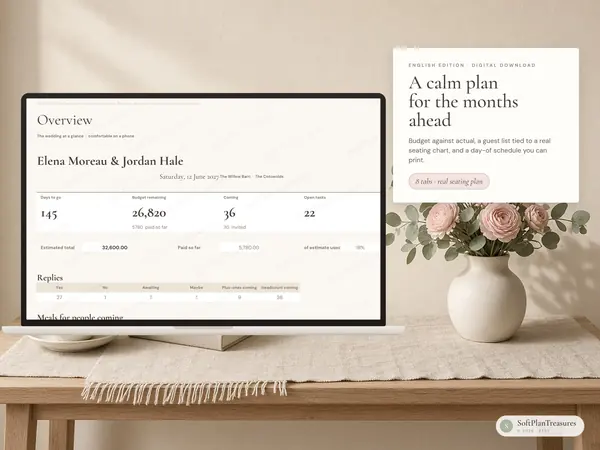
Our wedding planner spreadsheet is built around this exact method. The budget subtracts what you've actually paid, shows deposits, remaining amounts and a running total, and lists upcoming payments on the overview. It's connected to a guest list with RSVPs and meals, and a real seating chart. Eight tabs, not forty, for Google Sheets and Excel, with printable pages.
Planning in Norway? We also have a Norwegian version, Bryllupsplanlegger.
Spend on what you'll remember
The right wedding budget isn't the one that matches a chart. It's the one where the money goes to the moments you'll talk about for years, and the total doesn't follow you into your marriage. Agree on the number, rank your priorities, track what's paid, and let the rest be simple.